Preventative Care in Puget Sound
Comprehensive Preventative Dental Care for Children
Preventive dental care is the cornerstone of lifelong oral health, focusing on proactive strategies to stop dental problems before they begin. At Puget Sound Pediatric Dentistry, our comprehensive preventative care program is designed to empower children and their families with the knowledge, tools, and professional support needed to maintain healthy smiles from infancy through adolescence and beyond. This approach emphasizes early detection, risk assessment, and tailored interventions to minimize the need for more complex and costly restorative treatments later in life.
Preventative Care
Protect Your Child's Smile
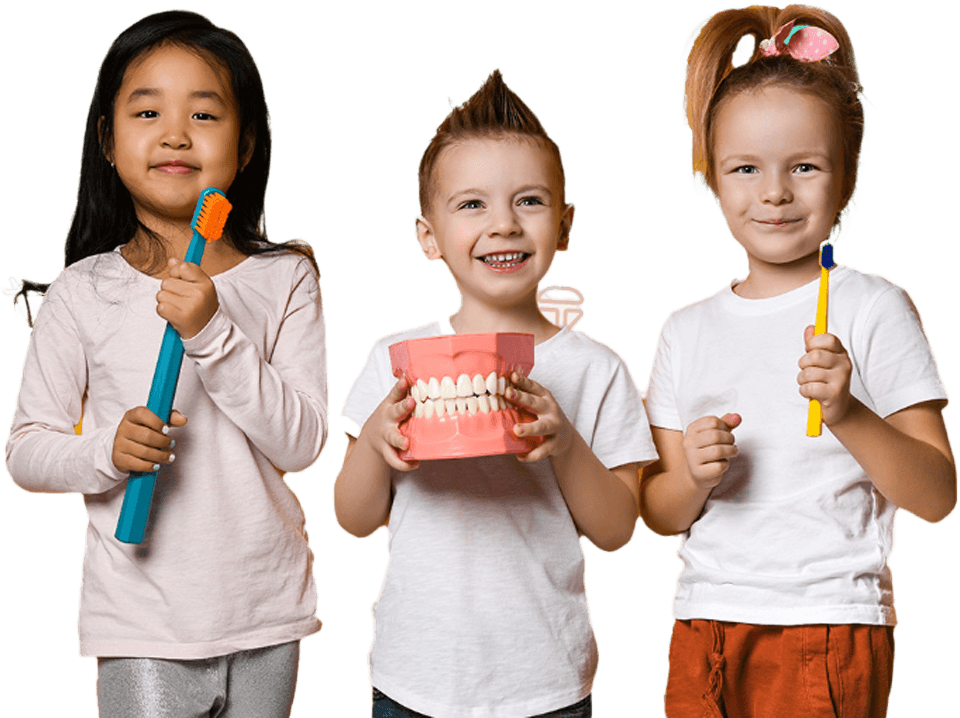
Dental cavities are the most common chronic disease among children in the U.S., affecting over 40% by kindergarten, according to the CDC. Preventive care helps reduce this risk, promoting lifelong oral health and positive dental habits.
Regular Cleanings
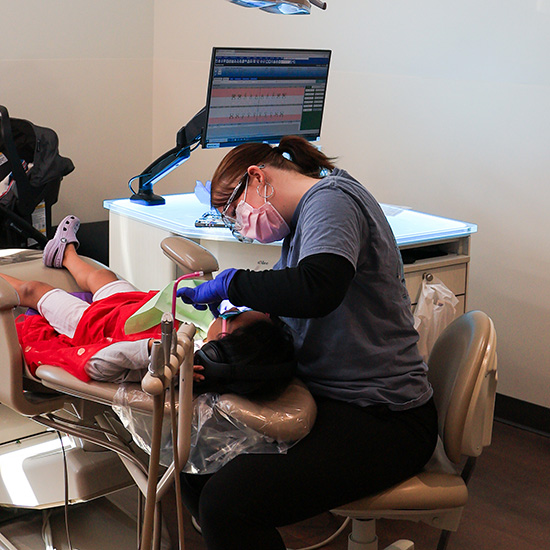
Our hygienists work gently and patiently, making every visit a positive experience for your child—and a helpful reset for their oral health routine.
Oral Exams
Including visual and tactile assessment, developmental monitoring, and risk factor analysis.
Fluoride Treatments
Application of professional-strength fluoride to strengthen enamel and prevent decay
Dental Sealants
Protective coatings are applied to the chewing surfaces of molars to prevent cavities.
Get Your Child Seen
Early Orthodontic Screening & Intervention
Early orthodontic screening is a key component of preventative care. The American Association of Orthodontists recommends a child’s first orthodontic check-up no later than age 7. This allows for the detection of developing bite problems (malocclusions) when intervention can be most effective and potentially less invasive.
Common Issues Addressed by Early Intervention
- Severe Crowding: Creating space for erupting permanent teeth.
- Crossbites: Correcting misalignment of upper and lower jaws.
- Protruding Teeth: Reducing the risk of dental trauma.
- Impacted Teeth: Helping guide teeth that are blocked from erupting.
- Harmful Habits: Using appliances to stop thumb sucking or tongue thrusting.

Professional Dental Cleanings & Polishing
Clean and Clear Smiles
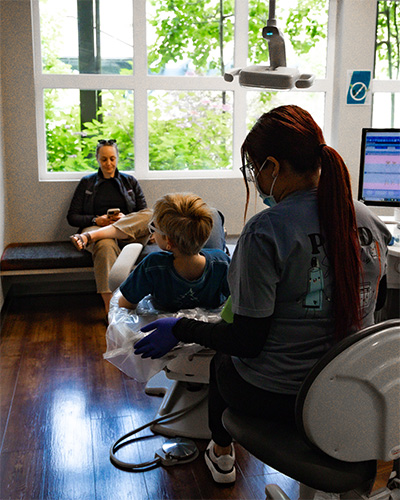
Professional dental cleanings (prophylaxis) are essential components of preventative
care that remove plaque, tartar, and stains that cannot be eliminated through home care alone. These procedures not only clean the teeth but also provide opportunities for
personalized education and early problem detection.
The Science Behind Professional Cleanings
Biofilm Management:
- Bacterial colonization: Within hours of cleaning, bacteria begin forming colonies on tooth surfaces
- Plaque maturation: Over 24-48 hours, plaque becomes more organized and resistant to removal
- Calcification process: After about 72 hours, minerals from saliva begin hardening plaque into calculus (tartar)
- Ecological shift: Mature biofilm creates an environment favorable for cavity-causing bacteria
- Professional disruption: Cleanings reset the biofilm, preventing pathogenic bacterial dominance
Tartar (Calculus) Removal:
- Formation mechanism: Mineralization of plaque by calcium and phosphate from saliva
- Attachment strength: Once formed, calculus bonds firmly to tooth surfaces
- Home care resistance: Brushing and flossing cannot remove established calculus
- Harboring effect: A rough tartar surface provides an ideal environment for bacterial accumulation
- Professional instruments: Special scaling tools are required for effective removal
Stain Elimination:
- Extrinsic staining: Surface discoloration from foods, beverages, and medications
- Pellicle interaction: Chromogenic substances bind to the acquired pellicle on teeth
- Porous enamel: Microscopic irregularities that trap staining agents
- Polishing action: Professional cleaning removes these surface stains
- Aesthetic benefits: Brighter smile and increased confidence
Comprehensive Oral Examinations
Your Child’s First Step to a Healthy Smile
Regular comprehensive oral examinations form the foundation of effective preventative dental care for children. These examinations go far beyond simply checking for cavities; they involve a thorough assessment of all aspects of your child’s oral health, development, and risk factors for future problems.
Components of a Comprehensive Examination
Tooth-by-Tooth Evaluation:
- Cavity detection: Careful inspection for early signs of decay, including white spot lesions
- Restoration assessment: Checking existing fillings or crowns for integrity and function
- Wear patterns: Identifying abnormal tooth wear that may indicate grinding or other issues
- Structural integrity: Examining for cracks, chips, or other damage
- Color changes: Noting discoloration that may indicate developmental defects or trauma
Soft Tissue Examination:
- Gum health assessment: Checking for signs of gingivitis or more serious gum disease
- Frenum evaluation: Assessing lip and tongue attachments for potential functional issues
- Oral mucosa inspection: Examining all soft tissues for abnormalities or lesions
- Tongue assessment: Checking size, mobility, and surface characteristics
- Salivary flow evaluation: Noting adequacy of saliva production and quality
Occlusion and Function Assessment:
- Bite relationship: Evaluating how the upper and lower teeth come together
- Jaw movement: Assessing temporomandibular joint (TMJ) function and range of motion
- Functional habits: Identifying signs of grinding, clenching, or other parafunctional habits
- Speech patterns: Noting any dental factors that may affect articulation
- Swallowing pattern: Checking for normal versus atypical swallowing mechanics
Fluoride Treatments
Strengthening Young Teeth
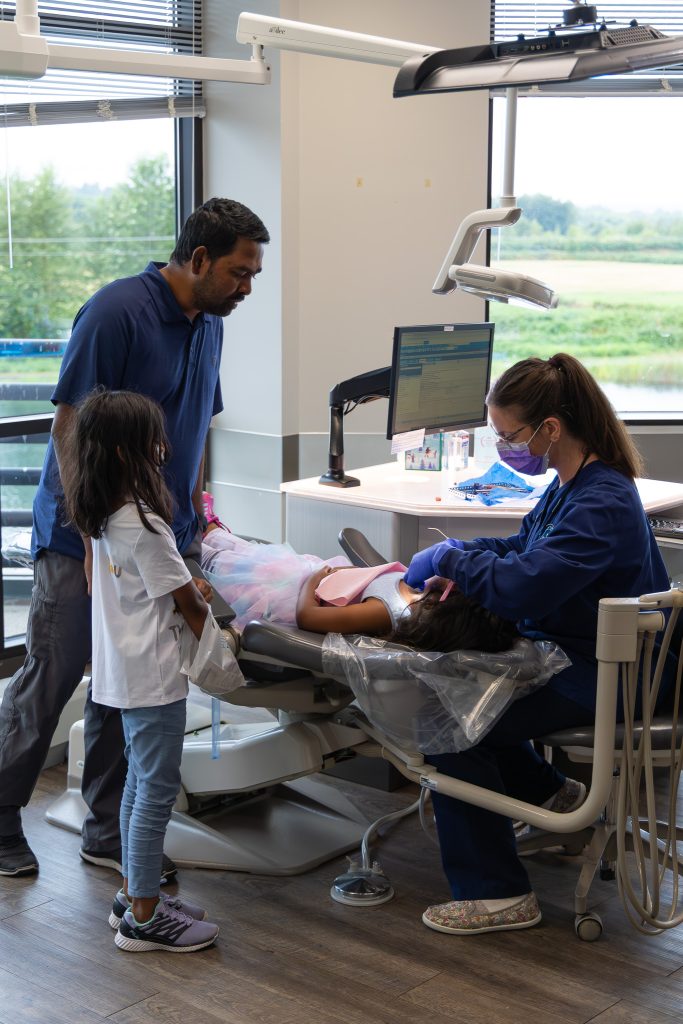
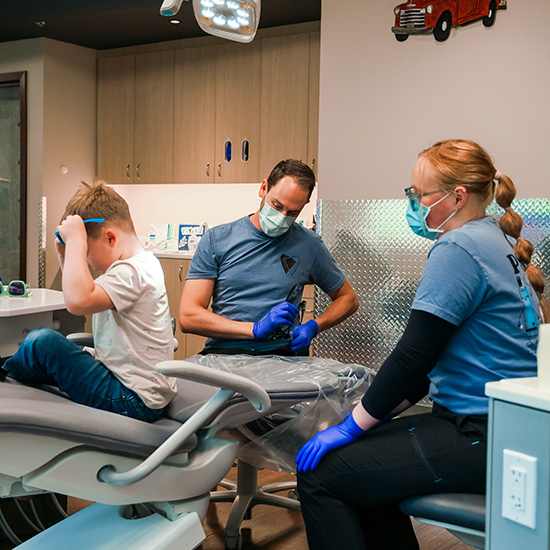
Professional fluoride treatments represent one of the most effective preventative
measures in pediatric dentistry, providing significant protection against tooth decay
through multiple mechanisms of action.
Understanding Fluoride's Protective Mechanisms
Enamel Strengthening:
- Remineralization enhancement: Fluoride accelerates the natural repair process of early decay
- Acid resistance: Fluoride-treated enamel is more resistant to acid attacks
- Crystal structure modification: Fluorapatite crystals formed are stronger than the original hydroxyapatite
- Microhardness increase: Surface hardness improves, reducing wear and abrasion
- Structural integrity: Overall strengthening of the enamel matrix
Antibacterial Effects:
- Metabolic inhibition: Fluoride interferes with bacterial enzyme systems
- Acid production reduction: Decreases bacteria’s ability to produce cavity-causing acids
- Plaque ecology modification: Shifts bacterial balance toward less cariogenic species
- Biofilm disruption: Interferes with bacterial adhesion and colonization
- Polysaccharide inhibition: Reduces the production of sticky substances that help bacteria adhere
Protective Actions:
- Surface protection: Forms calcium fluoride reservoirs that release fluoride over time
- Subsurface protection: Penetrates into enamel to strengthen internal structure
- Continuous availability: Slow release provides ongoing protection between applications
- Targeted action: Concentrates in areas most susceptible to decay
- Cumulative effect: Benefits increase with regular applications
Dental Sealants
Shielding Against Cavities
Dental sealants provide a physical barrier against cavity-causing bacteria and food particles, protecting the vulnerable pits and fissures of back teeth, where most childhood cavities occur.
The Science Behind Sealants
Understanding how sealants work helps parents appreciate their value as a preventative measure for their children’s teeth.
Anatomical Vulnerability:
- Deep grooves: Posterior teeth have natural depressions that trap bacteria
- Cleaning challenges: Toothbrush bristles cannot reach into deep fissures
- Food impaction: Food particles become trapped in these areas
- Bacterial colonization: A protected environment for cavity-causing bacteria
- Decay initiation: Cavity formation typically begins in these grooves
Sealant Mechanism:
- Physical barrier: Creates a smooth, protective layer over vulnerable surfaces
- Penetration action: Flows into deep grooves and hardens
- Sealing function: Prevents bacteria and food from accessing fissures
- Plaque prevention: A smooth surface reduces plaque accumulation
- Cleaning enhancement: Makes the tooth surface easier to clean effectively
Material Science:
- Resin-based sealants: Plastic-like materials that bond to tooth enamel
- Glass ionomer sealants: Fluoride-releasing materials for specific situations
- Polymerization process: Light or chemical curing to harden the material
- Retention mechanisms: Micromechanical bonding to tooth structure
- Durability factors: Material properties that affect longevity
Frequently Asked Questions About Preventative Care
We Will Guide You
Through Each Step
At what age should my child start preventative dental care?
The American Academy of Pediatric Dentistry and the American Dental Association recommend that your child’s first dental visit should occur within six months after their first tooth erupts, or by their first birthday, whichever comes first. This initial visit is primarily preventative, focusing on establishing a dental home, risk assessment, parental education, and guidance on infant oral hygiene.
How often should my child have a preventative dental visit?
For most children, a preventive visit (including an examination, cleaning, and fluoride treatment) is recommended every six months. However, children at higher risk for dental problems may benefit from more frequent visits (e.g., every 3-4 months). Your pediatric dentist will recommend a personalized schedule based on your child’s individual needs.
Are dental X-rays safe for children during preventative visits?
Yes, dental X-rays are very safe. We use digital X-ray technology, which significantly reduces radiation exposure (up to 90% less than traditional film X-rays). X-rays are only taken when clinically necessary to diagnose conditions not visible during a visual exam, such as cavities between teeth or issues with developing teeth. We follow strict guidelines to minimize exposure, such as using lead aprons and thyroid collars
What is the difference between a regular cleaning and a deep cleaning?
A regular cleaning (prophylaxis), which is part of preventative care, focuses on removing plaque and tartar from above and slightly below the gumline on healthy or mildly inflamed gums. A deep cleaning (scaling and root planing) is a therapeutic procedure for treating active gum disease (periodontitis). It involves cleaning tartar and bacteria from deep below the gumline and smoothing the tooth roots. Children rarely need deep cleanings; preventative cleanings are usually sufficient.
My child brushes twice a day. Are professional cleanings still necessary?
Absolutely. Even with excellent home care, some plaque and tartar will inevitably be missed, especially in hard-to-reach areas. Professional cleanings remove these stubborn deposits. Additionally, these visits allow the dentist to perform a thorough examination, apply professional-strength fluoride, assess sealant needs, and provide personalized oral hygiene and dietary counseling.
Let's Get Started
Start Your Child's
Journey Today!
The foundation for a lifetime of healthy smiles begins in childhood. By establishing good dental habits early and maintaining regular preventive care, you’re giving your child the gift of excellent oral health. Our team is ready to partner with you on this important journey. Schedule your child’s first visit today and see why families throughout Washington trust Puget Sound Pediatric Dentistry with their children’s dental care.