Tongue Ties/ Frenectomy
Skilled Care of Tongue-Tie and Lip-Tie in Marysville, Monroe, and Everett
Expert laser frenectomy services for tongue-ties and lip-ties at Puget Sound Pediatric Dentistry. Board-certified pediatric dentists serving families in Marysville, Monroe, and Everett. Gentle, effective treatment with immediate results.
Understanding Tongue-Ties and Lip-Ties: A Comprehensive Guide
What Is a Tongue-Tie (Ankyloglossia)?
A tongue-tie, medically known as ankyloglossia, is a congenital condition where the lingual frenulum (the thin strip of tissue connecting the tongue to the floor of the mouth) is:
- Too short or thick
- Positioned too far forward on the tongue
- Restricts normal tongue movement
- Interferes with essential functions like feeding, speech, and oral hygiene
Research indicates that tongue-ties occur in approximately 4-11% of newborns, with a higher prevalence in males than females. This condition can significantly impact an infant’s ability to breastfeed effectively and may lead to long-term complications if
left untreated.
What Is a Lip-Tie?
A lip-tie occurs when the labial frenulum (the tissue connecting the upper lip to the gums) is:
- Abnormally thick or tight
- Extends too far down the gum line
- Restricts upper lip mobility
- Creates a gap between front teeth (diastema)
Lip-ties often occur alongside tongue-ties and can compound feeding difficulties in infants while contributing to dental hygiene challenges and speech development issues in older children.
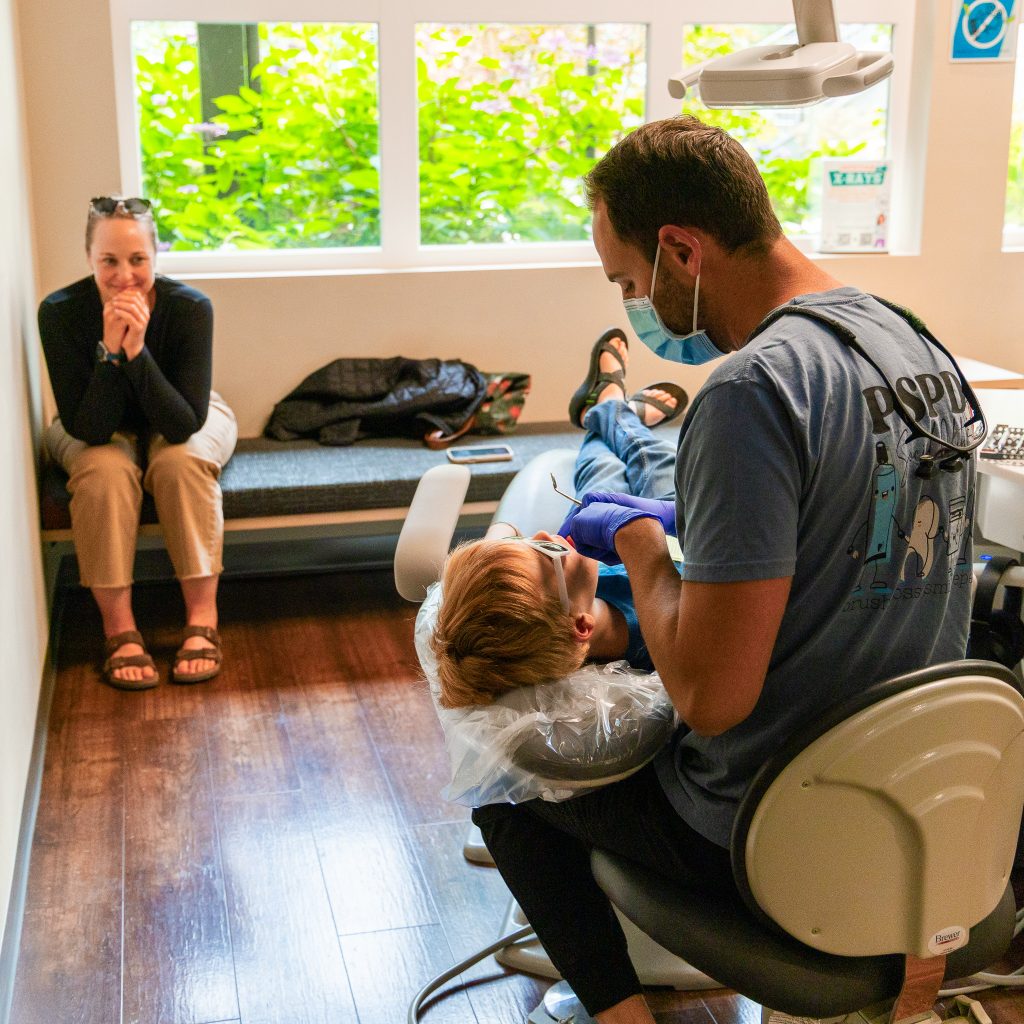
Comprehensive Assessment
Is Frenectomy Right for Your Child?
At Puget Sound Pediatric Dentistry, our board-certified pediatric dentists utilize a comprehensive assessment protocol that includes:
Functional Assessment
- Tongue mobility testing using standardized measurement tools
- Feeding observation for infants (breastfeeding or bottle-feeding)
- Speech evaluation for verbal children
- Oral hygiene assessment for school-age patients
Physical Examination
- Visual inspection of the frenulum attachment and thickness
- Palpation assessment to determine tissue elasticity
- Range of motion testing for tongue and lip mobility
- Dental alignment evaluation for spacing concerns
Collaborative Approach
We work closely with:
- Lactation consultants for breastfeeding support
- Speech-language pathologists for communication concerns
- Pediatricians for comprehensive care coordination
- Myofunctional therapists for muscle retraining
The Laser Frenectomy Procedure: Step-by-Step

Pre-Procedure Preparation
- Comprehensive consultation with detailed treatment planning
- Informed consent discussion covering benefits, risks, and alternatives
- Pre-operative instructions for optimal outcomes
- Comfort measures, including topical anesthesia if needed
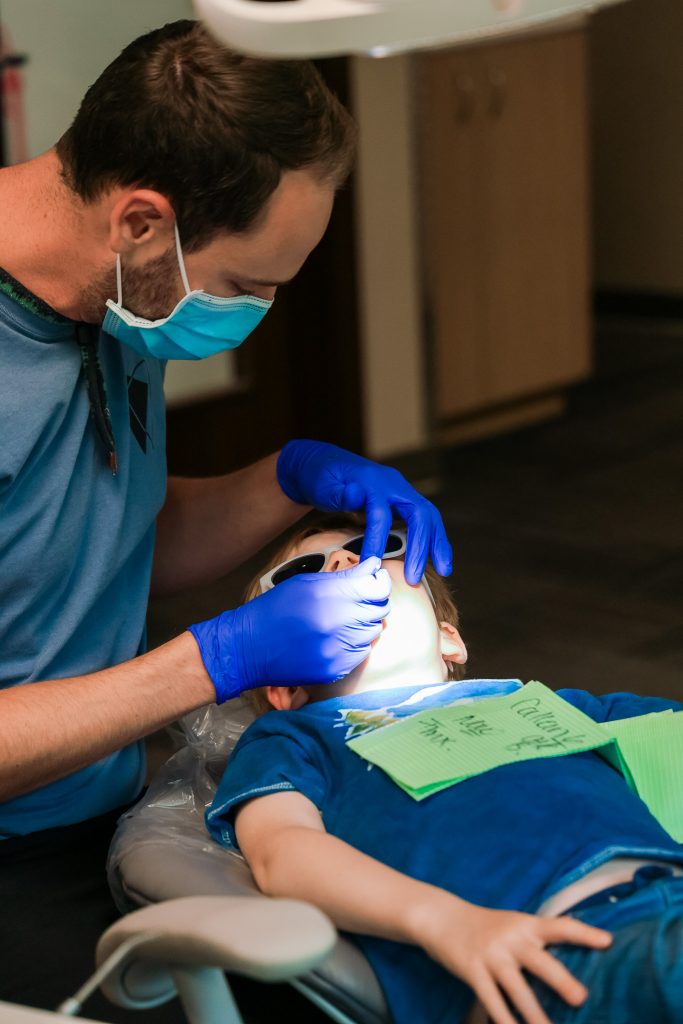
During the Procedure
- Patient positioning for optimal access and comfort
- Topical anesthesia application for maximum comfort
- Precise laser application lasting typically 30-60 seconds
- Immediate assessment of improved mobility
- Post-procedure comfort measures
Immediate Post-Procedure Care
- Feeding is encouraged within 30 minutes for infants
- Gentle stretching exercises are demonstrated to parents
- Comfort measures, including appropriate pain management
- Follow-up scheduling for progress monitoring
Common Myths About Tongue-Ties and Frenectomy
We Will Guide You
Through Each Step
MYTH #1: "Tongue-ties will resolve on their own"
REALITY: Tongue-ties are structural abnormalities that do not self-correct. While some children may develop compensatory mechanisms, the underlying restriction remains and can lead to long-term complications, including:
- Persistent feeding difficulties
- Speech articulation problems
- Dental hygiene challenges
- Social and emotional impacts
MYTH #2: "Frenectomy is too painful for infants"
REALITY: Modern laser frenectomy is minimally uncomfortable, with most infants showing:
- Immediate comfort following the procedure
- Improved feeding within the first nursing session
- Minimal crying during the brief procedure
- No long-term trauma or negative associations
MYTH #3: "All tongue-ties need treatment"
REALITY: Not every tongue-tie requires intervention. Our comprehensive assessment determines treatment necessity based on:
- Functional limitations affecting feeding or speech
- Quality of life impacts for the child and family
- Long-term developmental considerations
- Individual patient factors
MYTH #4: "Frenectomy will automatically solve all feeding problems"
REALITY: While frenectomy addresses the structural component, optimal outcomes often require:
- Lactation support for technique refinement
- Myofunctional therapy for muscle retraining
- Time for adaptation to new movement patterns
- Ongoing support from the healthcare team
Let's Get Started
Start Your Child's
Journey Today!
The foundation for a lifetime of healthy smiles begins in childhood. By establishing good dental habits early and maintaining regular preventive care, you’re giving your child the gift of excellent oral health. Our team is ready to partner with you on this important journey. Schedule your child’s first visit today and see why families throughout Washington trust Puget Sound Pediatric Dentistry with their children’s dental care.